
News
July 27, 2017
Image above: Serving fresh vegetables at meal time. Credit: Mark Luinenburg. Photo courtesy of Bedford Stuyvesant Restoration Corporation. In New York and other cities, substantial evidence documents that community food environments interact with inequitable allocation of power, wealth, and services to shape the distribution of diet-related diseases and food insecurity. What role can local organizations such as community development corporations and settlement houses play in [...]

July 27, 2017
On, July 24, 2017, the CUNY Urban Food Policy Institute held the first training session of its Countermarketing Staff Training Program (CSTP). The CSTP was developed to train staff at youth-serving organizations in New York City to launch food countermarketing initiatives that engage youth. Food countermarketing describes activities that decrease the consumption of unhealthy food and beverages. Food countermarketing activities go against or oppose the [...]

July 27, 2017
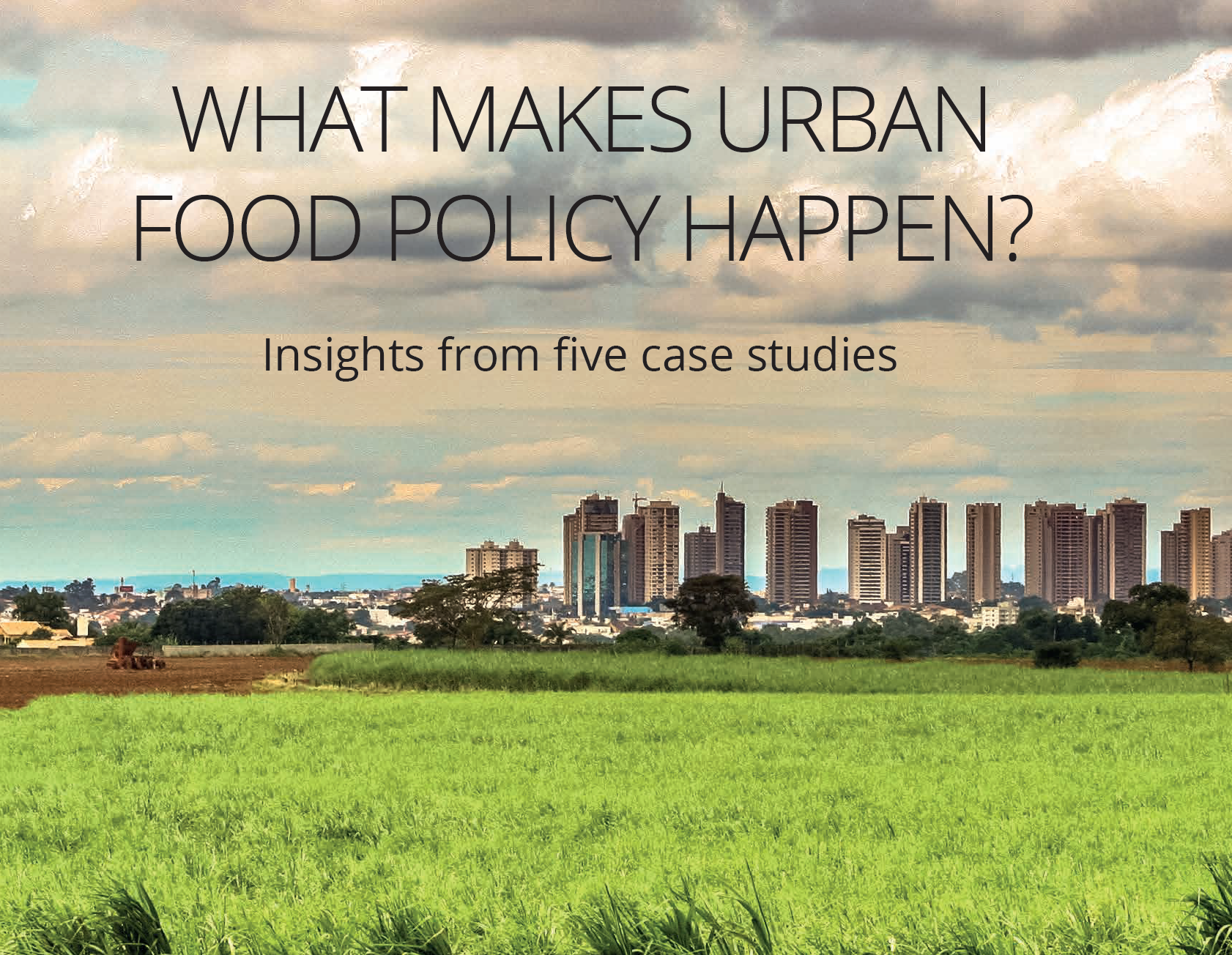
In a new report What Makes Urban Food Policy Happen? Insights from five case studies, the International Panel of Experts on Sustainable Food Systems (IPES-Food) took an in-depth look at food policies in four cities—Nairobi (Kenya), Belo Horizonte (Brazil), Detroit (USA), Amsterdam (the Netherlands)—and one city-region, Toronto and the Golden Horseshoe (Canada). The report explores the nuts and bolts of policy making and shares the [...]
July 7, 2017
This spring the CUNY Urban Food Policy Institute led a Youth Sugar Sweetened Beverage Countermarketing project, working with students from A. Philip Randolph High School to develop countermarketing images against unhealthy, sugar-sweetened beverages. Countermarketing uses health communications strategies to reduce the demand for unhealthy products by exposing the motives of their producers. Through these images the students take a stand against beverage companies marketing to them and [...]

June 21, 2017
*A condensed version of this commentary was cross-posted on Civil Eats. In many ways, life in the 21st century has been much the same as it was in the 20th century. People go to work, school and spend time with friends and family in mostly the same ways they did sixty years ago. Moreover, many of the same issues plague society -- income inequality, low-wage [...]

June 21, 2017
As members of the Lunch 4 Learning campaign, we are pleased to announce New York City has included additional funds in this year’s budget to expand universal free school lunch to include 90% of schools and 84% of students. Schools with more than 70 percent of students eligible for free or reduced price lunch were included in this expansion, adding 890 schools to the 595 [...]

June 21, 2017
CUNY SPH held its inaugural commencement ceremony on Thursday, June 1, 2017. Master’s and doctoral graduates from the Class of 2017, as well as from the Fall Class of 2016 were celebrated at the ceremony, which was held at the historic Apollo Theater in Harlem.

June 14, 2017
FDA delayed compliance and jeopardized public health The Center for Science in the Public Interest and the National Consumers League, both represented by the nonprofit law firm Earthjustice, filed a lawsuit in U.S. District Court for the District of Columbia challenging the U.S. Food and Drug Administration’s decision to delay a rule requiring chain restaurants, supermarkets, convenience stores, and other food retail establishments to post [...]

May 30, 2017
This post also appears on Civil Eats. A recent discussion of how to unite food activists in New York City with the larger Trump resistance offers lessons and tools to create positive change everywhere. By Mark Bittman and Nicholas Freudenberg In the four months since Trump took office, many of our fears have come true. Spiking deportation activities have scared farmworkers out of the fields [...]


